



Follow Us @genisyscorp
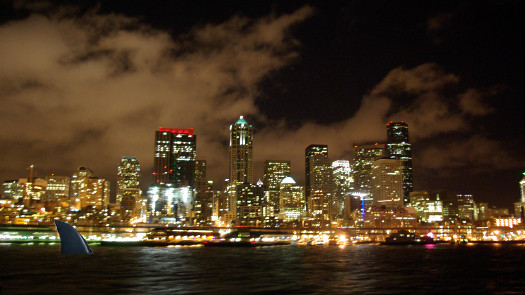
I don’t think those words mean what you think they mean…
The latest in an ever-growing line of disappointments from the Discovery Channel took place Sunday night as they kicked off the yearly Shark Week. The big event was Megalodon: The Monster Shark That Lives. The “documentary” was supposed to reveal evidence that the long-extinct creature was still out there in the oceans. They had “scientists”, on an “expedition”, “eye-witness accounts”, “photographic evidence”… If you are wondering about my sudden penchant for putting things in quotes, it’s because every last bit of this thing was fiction. There was no sunken boat. No whale bitten in half. The scientist was an actor. Etc.. etc… etc… There’s a great open letter to Discovery by Christie Wilcox at Discover Magazine’s website that breaks it all down.
And that’s either sad, or infuriating, depending on how you look at it. Even more so if you take a hop over to the Discovery Corporate page and check out the description of what the Discovery Channel is intended (or claims) to be.
Discovery Channel, one of the most widely distributed cable networks in the U.S., is dedicated to creating the highest quality non-fiction content that informs and entertains its consumers about the world in all its wonder, diversity and amazement.
Quality non-fiction they say. In all seriousness, Megalodon was just slightly less fictitious than Sharknado. It’s so absurd at its core that my ridiculous image opening this article could have been used as ‘proof’ that giant sharks are roaming the Seattle waterfront. And when you add it to the sad likes of Amish Mafia, Devil’s Ride, and Saint Hoods it doesn’t paint a very nice picture of how far the channel has fallen from its original vision.

A visual treat for Friday. Thanks to a wonderful merger of the internet, modern photography technology, and a great idea… we can all sit at our computers and marvel at the intricacies of modern day Tokyo. This is the work of photographer Jeffrey Martin, and you are only seeing the tiniest slice of what he has done in the above image. The actual image is 600,000 pixels wide and encompasses a 360 degree view of Tokyo as seen from Tokyo Tower. To really appreciate it, you have to check out the interactive version on 360gigapixels.com.
To give you an idea of the scale of this thing, here is a 100% crop of the screen zoomed in all the way on a billboard featuring Pelé.

And here is a 100% crop zoomed all the way out. The red arrow shows you where the Pelé billboard is. Amazing!


Seattle’s Gum Wall has been ranked among the world’s top five “Germiest Attractions.” In a list released Thursday by TripAdvisor, the popular attraction, located outside the Market Theatre at Pike Place Market, comes in at #2, following Ireland’s Blarney Stone in the top spot.
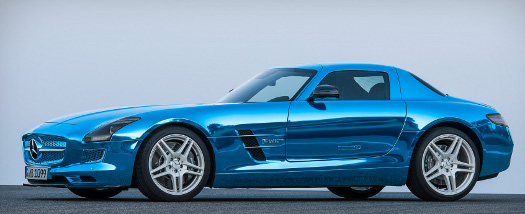
To go along with the new BMW, I thought I would throw this up here. It’s the new Mercedes SLS AMG Coupé Electric Drive. Yes, an AMG electric car. You might scratch your head at that idea, but it has the numbers to back up that fancy AMG plate: 740 HP – 738 pounds of torque – 0 to 60 in 3.9 seconds – 155 mph top speed. According to Top Gear, it’s pretty remarkable.
It is still ridiculously expensive. The ED version will set you back $535,000, vs $200,000 for the standard SLS AMG Coupé and $275,000 for the black series. It also has a 155 mile range and takes three hours to charge. So, we’re looking at the same issues here, but the notable takeaway is that Mercedes is making an electric version of a car from the regular lineup, which is a step in the right direction.
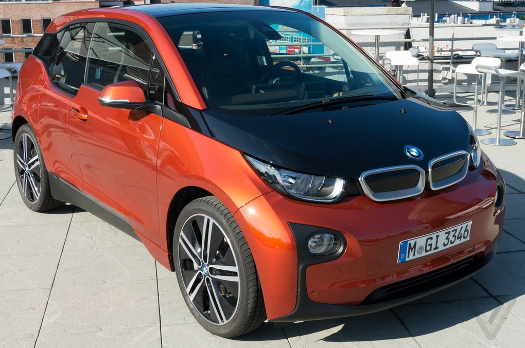
BMW has announced the i3, their first from the ground up electric vehicle. It’s interesting, but at the end of the day it runs up against the same old stumbling blocks that EVs always do. To start, there is the price. $41,350 might not be a lot of beans for A BMW, but it is an awful lot for THAT BMW. You can get into a 3 or 4 series car for less than that. I suppose the argument is that you’ll make that extra coin back in not buying gasoline, but I don’t think the math really works there either.
Let’s do some back of the napkin calculations. Based on looks and capability, the i3 is in the ballpark of things like Honda’s Fit or Ford’s Fiesta. You can get into either of those for around 14 or 16 K. The fun bit of math comes in discovering how far you could drive those cars for that extra 25 grand. At $4 a gallon, you’re looking at around 215,000 miles (14 years at 15K miles per) before the break even point. That is without factoring in any money spent recharging the i3. With that added, the number increases.
To be fair, a Fit or a Fiesta might not be a perfect comparison to the i3. There is something of a cachet to driving a BMW that one doesn’t necessarily find in a Ford. But the Fit and Fiesta are a lot closer to the i3 than the i3 is to its $40,000 internal combustion peers. And getting back to that charging thing… The range of the i3 is 80 to 100 miles. Perfectly usable for certain people, in certain situations, but once again lacking in one of the crucial areas that EVs will need to conquer in order to attain the mass appeal that will bring about an actual change.
So, meet the new EV boss. Same as the old boss. It’s really expensive, with an iffy range, and refueling/recharging remain orders of magnitude apart. At best, it’s one small step for EV kind, but we are really no closer to the alternative fuel future.

If you’re like me, you probably remember Paint as one of the first things you installed a replacement for when you encountered a fresh install of Windows. GIMP, Paint.net, Picasa, Photoscape… Something. Anything was better than Paint. But maybe that’s just me. It seems that for some people, Paint is the stuff. Those pictures at the top of the post are from Hal Lasko, also known as the pixel painter. Hal is 98, a retired graphic designer, and he did all of that with Paint. There’s a cool documentary about Hal on Vimeo (embedded below), and there are prints of his work available at hallasko.com.

Google has announced their latest product, the Chromecast. The tiny device plugs into your TV and allows various services (Netflix, YouTube, Google Play Movies & TV, and Google Play Music) to be “cast” from your phone, tablet, or laptopto the big screen. With the addition of the Google Cast SDK developers will be able to create apps with multi-screen experiences. The Chromecast is joined by the new version of the Nexus 7. The flagship tablet is now sporting a 323 pixels per inch screen and becomes the first device to ship with Android 4.3.
The desktop that leaves the desk behind. Create together, enjoy together on a all-in-one that moves with you. Stand the touchscreen upright to watch movies, then move it to the living room and lay it flat for group games and creative projects.

All-in-one. In any room.
- Get creative in the kitchen. Plan holidays from your couch. From school projects at the dining room table to paying bills in the den, you’ll carry this mobile all-in- from room to room.
- Get more done in any room in the house. The built-in battery gives you more time to do what you need without recharging your mobile all-in-one.
- HP ProtectSmart helps keep your mobile all-in-one’s data safe from accidental bumps and bruises. It senses motion and plans ahead, so a single bump won’t delete your entire digital life.
- Charge devices through HP USB Boost while this all-in-one is on, off, sleeping, or hibernating. It helps keep you powered up whenever you need to be.
- Light may change from room to room. Your mobile all-in-one adapts, and automatically optimizes your display’s lighting to deliver the best view possible.
Play all the angles
- A unique, hinged stand lets you tilt the screen flat for games, upright for movies and documents, and anywhere in between.
- Rotate your view of the display while playing a board game or viewing images with the simple press of a button—all without moving the PC itself.
- Movies and games are big enough to share on this 20-inch diagonal, HD+[1] touchscreen with wide viewing angles, rich colors, and sharp graphics.
- With an Intel Wireless Display, you can send HD[1]content from your all-in-one to your TV, or other displays for an even larger view without the cumbersome cords.[2,3]
- Sometimes in life, only a face-to-face conversation will do. Thanks to the HP TrueVision HD Webcam[3], you always come off looking your best. Even in low light.
Touchscreen. Together.
- Tap, swipe, and type away on the 10-point touchscreen that responds to multiple gestures at once. Play piano, draw together, or enjoy a family game.
- Bring your visuals to life with integrated Intel graphics. With two microphones and advanced noise reduction software, web chats are crystal clear.
- With Beats Audio™, dual speakers, and a subwoofer, the HP ENVY Rove is designed for the best sounding, richest audio available on a PC.
- Get family and friends immersed in playtime with a full-touch experience loaded with gaming software designed for multiple players.
- Sync photos across your PC, smartphone, and tablet. Crop, rotate, add captions, and more. Share in seconds with friends and family through your social networks with HP Connected Photo.[4]
[1] High-definition (HD) content required to view HD images.
[2] Intel Wireless Display available on Intel product only. Requires separate purchase of a Netgear Push2TV adapter and an HD TV with HDMI or composite A/V input.
[3] Wireless access point and Internet service required and not included. Availability of public wireless access points limited.
[4] Supported on Android and iOS operating systems. Snapfish by HP mobile app download and Snapfish membership required. Internet service required and not included.

HP has announced a new line of monitors to be paired with their Z line of workstations. The collection of 22, 23, and 24 inch IPS displays are also joined by new entry-level Z workstations that are supposed to offer workstation performance at a PC price. The full press release is after the jump, and you can find more info at the HP Workstation site.
Note: When inserting processors into cell board zif sockets be certain you have all the pins lined up. This can only be done by feel, so take your time.
